
MAGIC BB
The 3-Minute Reset — Your First 14 Days
Three minutes a day. Fourteen days. Let your back unwind.
Day 1 takes three minutes. Start today.
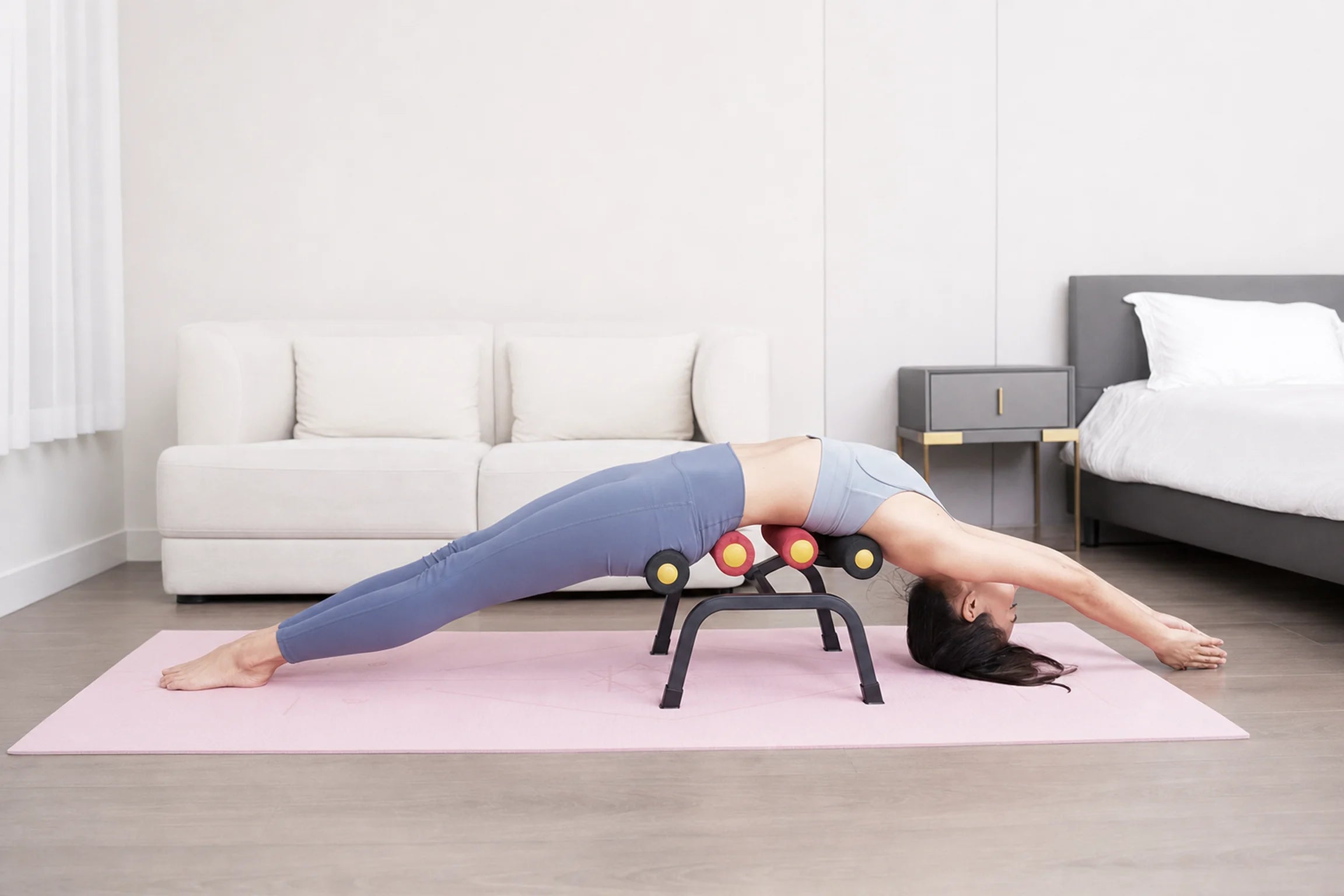
Start here.
Consistency beats intensity — that's the whole plan. Three minutes at a time.
- Set up your table somewhere you'll actually use it
- Learn one core move and do it well
- Follow a light day-by-day calendar you can tick off as you go
Where it lives decides whether you use it.
Pick a spot you pass every day: beside the couch, at the foot of the bed, or by your desk. It only needs about 2 sq ft of floor — roughly a bath-mat's worth of space.
- Keep it visible. A tool you can see is a tool you'll reach for.
- Give it a little clear space around it, so nothing's in your way when you lie back.
- Put it near a wall or steady surface you can rest a hand on as you get on and off.
Read the full welcome
This is a simple, two-week way to build a short daily stretch into your routine. No big program, no pressure. Just three minutes at a time.
Here's the one idea that makes it work: consistency beats intensity. A gentle three-minute stretch you actually do most days will do more for you than a long session you dread and skip. So we've kept every day short on purpose.
That's the whole plan. Some days you may feel more loosened up than others — that's normal, and it's not a race. Move at your own pace, breathe easy, and if anything feels sharp or wrong, stop.
Once your table is out of the box and ready, the only real decision is where to put it — and that decision matters more than it sounds. When it's tucked out of sight in a closet, it quietly turns into something you "mean to get to." When it's in view, it becomes part of the room, and a three-minute stretch feels like the easy option instead of a chore.
That's it. Set it down where you'll see it, and you've already done the hardest part.
Not medical advice. Personal results may vary.

One move is all you need. Let's do it well.
Your first go doesn't need to be perfect — it just needs to happen.
Before you start
- Move slowly and stay in control the whole time. There's no rush and no need to go far.
- Keep a hand on a wall or steady surface as you get on and off.
- If anything feels sharp, pinched, or dizzy, come back up gently and stop for the day.
- See Safety & Precautions below before your first try, especially if any of the cautions there apply to you.
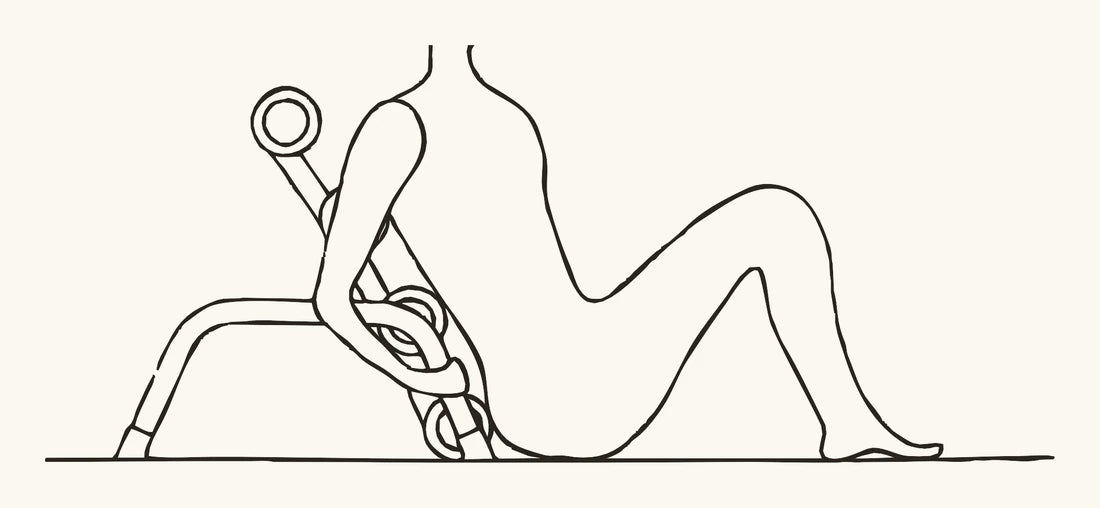
Getting on — the safe path in
- Set the table on a flat, non-slip floor with clear space around it.
- Sit on the floor with your back against the table, close to its middle, feet flat on the floor.
- With your hands on the frame's side rails (or one on a nearby wall) for balance, lower yourself back slowly, one vertebra at a time, until your head and shoulders are supported.
- Let your arms settle by your sides. You're set.

The move — a slow, easy arch
- Head and neck: keep your chin gently level, not tucked hard to your chest and not thrown back. Your neck should feel long and unstrained. If your head reaches the floor, let it rest there fully. If it doesn't, support it in your hands rather than letting it hang.
- Hands and arms: rest them loosely at your sides or on your stomach, or keep a light hold on the frame's side rails. At Level ②, where your head clears the rollers, lace your fingers behind it, elbows soft and wide, and support it without pulling. Keep every hold light — no tense gripping.
- Breathe: inhale slowly through your nose, then exhale long and soft. Let your shoulders drop a little more with each breath out.
- Ease into the stretch: let your back settle into a gentle backward arch over the table. Go only as far as feels comfortable and easy — a mild, open stretch, never a strain.
- Stay and breathe for a few slow breaths. This gentle, supported stretch is the whole move.
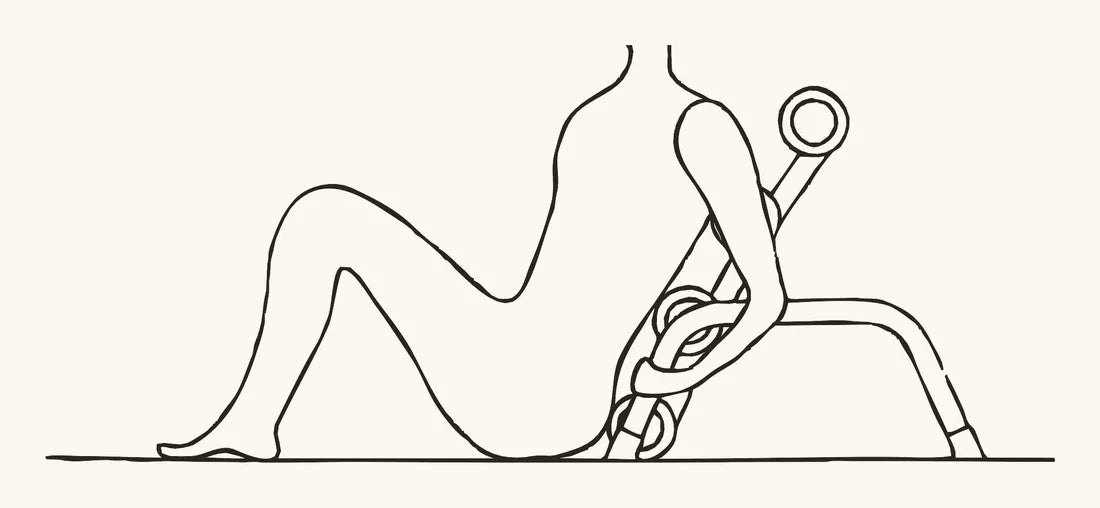
Getting off — the safe path out
- Bring your arms back down and place your hands on the frame's side rails or a nearby wall.
- Come back up slowly, curling forward one vertebra at a time until you're sitting upright.
- Pause and sit for a moment before you stand — a slow return helps you feel steady on your feet.
How it should feel: easy, open, and comfortable. A gentle stretch — never sharp, never forced.
Don't wait for the "right" day. Do a short one now.
Keep it gentle and well within 3 minutes — that's a full first session. Then tick off Day 1 on your printed calendar. That first check-mark is the momentum you're building on.
Your starter version
Your first go doesn't need to be perfect — it just needs to happen. Getting on once, today, is what turns this from a nice idea into something you actually do.
Here's your starter version — keep it light: 1. Get on slowly using the safe path above, hand on the frame or wall. 2. Settle and breathe — a few slow breaths in through the nose, long out through the mouth. Let your shoulders drop. 3. Ease into a gentle arch, going only as far as feels easy. Stay for a few relaxed breaths. 4. Come back up slowly, one vertebra at a time, and sit for a moment before you stand.
You may feel a little looser afterward, or you may just feel like you got started — both are wins.
Not medical advice. Personal results may vary.
Fourteen short days. One easy tick at a time.
Each day is a three-minute stretch — or a rest. Print the calendar, put it where you'll see it, and tick each day off on paper as you go. The check-marks are the point: a row of them is what keeps you coming back.
Ease In
A gentle lean-back (about 135°). The shallowest, most supported opening. Start here.
Level Out
A full, level stretch (about 180°). Your back long and open in a straight line. Move here once ① feels easy.
Deeper Still
A deeper opening (about 225°). A fuller stretch for when you clearly feel ready — still lying back with the frame supporting you. Optional — there's no need to reach it. If you ever feel pressure in your head or eyes, or any lightheadedness, come back up gently and stop — see Safety & Precautions.
About rest days: rest is part of the plan, not a gap in it. On rest days, skip the table — a slow walk or an easy standing stretch is plenty. Coming back the next day is what counts.
Your 14 days
- 1 ① First short session — get on, breathe, gentle arch
- 2 ① Gentle arch, a few slow breaths
Days 3 to 14 come with your table — the day-by-day plan is waiting when it arrives.
Once the routine feels easy, you can add a few gentle floor moves.
The week-two add-ons come with the program.
Cat–Cow (on hands and knees)
Knee Hugs (lying on your back)
Standing Side Reach
Not medical advice. Personal results may vary.
The full 14-day program comes with every table.
Every Magic BB table ships with the complete plan — all fourteen days, the printable calendar, and the safety guide, ready the day your table arrives.
See the Magic BB tableSafety & Precautions
Please read this before your first session.
This is a general wellness routine, not medical advice, and it isn't right for everyone. Please talk with your doctor before you start if any of the following apply to you:
- you are pregnant,
- you have high blood pressure,
- you have glaucoma or other eye conditions,
- you have a recent or ongoing back injury,
- or you have any heart condition, or any other health concern you're unsure about.
If you're ever in doubt about whether this is suitable for you, check with a healthcare professional first.
While you use it:
- Move slowly and stay in control getting on, stretching, and getting off. Keep a hand on the frame or a wall for balance.
- Never force a stretch. Go only as far as feels easy and comfortable.
- Stop right away if you feel pain, pinching, dizziness, lightheadedness, pressure in your head or eyes, shortness of breath, or anything that doesn't feel right — and come back up gently.
- Use it on a flat, non-slip surface with clear space around you.
- Ease back in gradually after any time away.
Listen to your body. Comfort and consistency matter far more than how far or how long you stretch.
This guide is for general wellness and is not medical advice. It is not intended to diagnose, treat, cure, or prevent any condition. Personal results may vary. Consult your doctor before beginning any new stretching or exercise routine.